

For working professionals, choosing an MBA is often less about starting their careers again and more about using their existing experience to move towards the next stage of their professional journey.
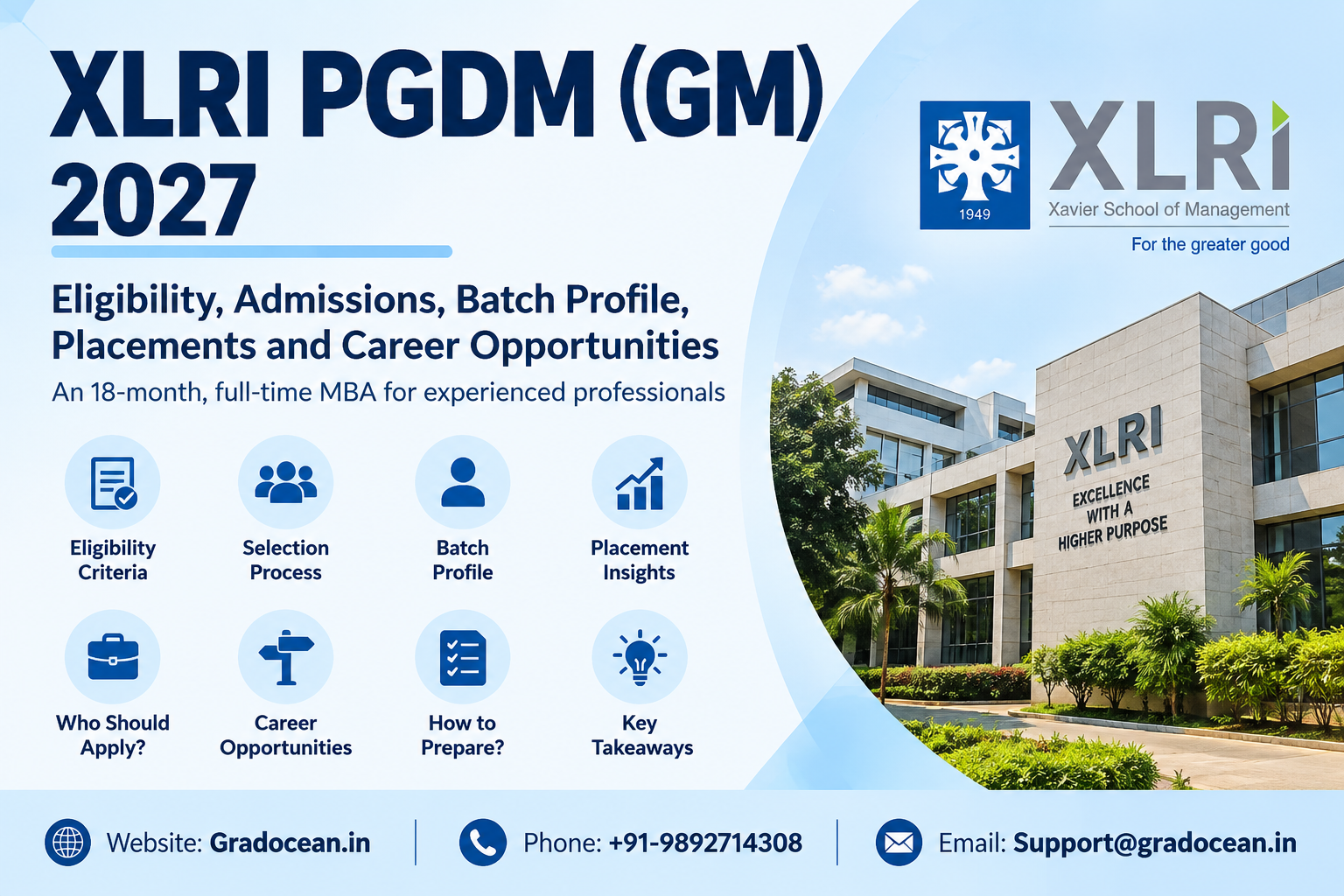
XLRI’s PGDM (GM) is an 18-month, full-time residential management programme designed for experienced professionals who want to develop broader business and management capabilities.
Formerly known as the General Management Programme (GMP), the programme has made an important change to its eligibility criteria. The minimum work experience requirement has been reduced from 60 months to 36 months.
This makes XLRI PGDM (GM) accessible to a broader group of professionals considering a full-time MBA after gaining a few years of work experience.
XLRI PGDM (GM) Eligibility
Candidates need to have a recognised bachelor’s degree of at least three years in any discipline.
They must also have at least three years of managerial or supervisory experience by March 31, 2026.
Candidates can apply using GMAT or GRE scores from tests taken between December 1, 2023 and December 31, 2026. XAT 2027 scores are also accepted, with the examination scheduled for January 3, 2027.
For the 2027 intake, the application deadline through the XAT route is December 6, 2026.
Candidates applying through the GMAT or GRE route have until December 31, 2026 to submit their applications.
The reduction in the work experience requirement is particularly relevant for professionals with around three to five years of experience who may previously have had to wait longer before becoming eligible for the programme.
XLRI PGDM (GM) Selection Process
Admission to XLRI PGDM (GM) is not based only on the entrance examination score.
The selection process considers factors such as XAT performance, academic ability, relevant work experience, extracurricular activities and performance in interviews and/or group discussions.
Candidates applying to multiple XLRI programmes may be required to participate in multiple interviews or group discussions.
For candidates residing outside India who are unable to attend an in-person interview, online interviews are conducted for PGDM (GM).
Applicants should therefore approach the application holistically rather than focusing entirely on the GMAT, GRE or XAT.
Your academic history, professional progression, achievements, leadership experiences, extracurricular activities and interview performance can all play an important role in presenting your overall candidature.
Who Is XLRI PGDM (GM) Designed For?
The programme attracts professionals from a range of industries and functional backgrounds.
The 2026–27 batch consists of 117 students, with an average age of approximately 26–27 years and average work experience of 51 months.
Engineering represents 82% of the academic background of the batch. The remaining participants come from backgrounds including arts and commerce, science and other disciplines.
Professionally, the cohort includes managers and team leads, developers and engineers, analysts and consultants, business owners and project management professionals.
IT and ITeS represent the largest industry group at 42%. Participants also come from automotive and manufacturing, BFSI, education, retail, energy, hospitality, aviation, telecom and other sectors.
The batch profile indicates that the programme is relevant across multiple industries rather than being restricted to candidates from a particular professional background.
What Does the Placement Data Show?
Placement outcomes are an important consideration for professionals evaluating a full-time MBA, particularly because leaving employment for a residential programme involves both tuition costs and an opportunity cost.
For the 2021–22 batch, 112 out of 114 students opted for placements.
The highest reported salary was ₹44.7 lakh, while the median salary was ₹26 lakh.
The average salary for the top 10% of the batch was ₹34.2 lakh. For the top 25%, it was ₹32.5 lakh, while the top 50% recorded an average salary of ₹30 lakh.
In terms of sectors, IT and ITeS accounted for 51% of placements, while Consulting accounted for 29%.
Candidates should remember that these figures relate to a specific placement year and should not be interpreted as guaranteed outcomes for future batches. Individual outcomes can vary depending on prior experience, skills, market conditions, recruiting requirements and interview performance.
Who Should Consider XLRI PGDM (GM)?
The programme can be relevant for professionals who have already developed meaningful work experience but now want broader exposure to management and business functions.
For example, engineers and technical professionals may use the programme to explore roles involving strategy, consulting, operations, product, programme management or general management.
Professionals already managing teams or projects may use the MBA to move towards larger leadership responsibilities.
Consultants and analysts may look at opportunities involving strategy, transformation and business leadership.
Entrepreneurs and business owners may use the programme to strengthen their understanding of finance, strategy, marketing, operations and organisational management.
The right post-MBA direction will depend significantly on what you have done before the MBA.
How Should You Evaluate XLRI PGDM (GM)?
When comparing XLRI PGDM (GM) with other experienced-professional MBA programmes, candidates should look beyond rankings or salary figures.
Start by evaluating your current work experience and the type of role you want after the MBA.
If you are looking to change industries while retaining your existing functional expertise, the transition may be relatively easier to explain. A professional working in manufacturing operations, for example, could potentially use an MBA to move towards broader operations, supply chain or consulting roles.
Changing both your industry and function at the same time can require more preparation and a stronger career narrative.
You should also evaluate the programme duration, curriculum, cohort profile, placement opportunities, total cost, opportunity cost and the types of recruiters and roles relevant to your experience.
How Should Applicants Prepare?
The first step is to build a competitive GMAT, GRE or XAT score.
However, test preparation should not be the only focus.
Applicants should also identify the most significant achievements from their professional careers and quantify their impact wherever possible.
Instead of simply describing your job responsibilities, explain the scale and outcome of your work. This could include revenue generated, costs reduced, projects delivered, teams managed, processes improved, clients handled or other measurable results.
Leadership does not necessarily mean having a formal managerial designation. Examples of taking ownership, influencing stakeholders, solving difficult problems or leading initiatives can also demonstrate leadership potential.
Most importantly, candidates should develop clarity around three questions: Why do you need an MBA now? What do you want to pursue immediately after the programme? How will XLRI PGDM (GM) help you bridge the gap between your current experience and your post-MBA goals?
These questions can become important not only while preparing the application but also during the interview.
Final Thoughts
The reduction in the minimum work experience requirement from five years to three years makes XLRI PGDM (GM) relevant to a wider pool of working professionals.
However, becoming eligible does not necessarily mean that applying immediately is the right decision for every candidate.
Your work experience, career progression, entrance test score, achievements and clarity of post-MBA goals should all be considered when deciding when to apply.
For candidates with relevant professional experience who are looking for a full-time management programme and want to use their existing experience to move towards broader business or leadership roles, XLRI PGDM (GM) is one of the programmes that can be considered alongside other experienced-professional MBA options in India.
Frequently Asked Questions
1. What is XLRI PGDM (GM)?
XLRI PGDM (GM) is an 18-month, full-time residential management programme designed for experienced professionals who want to develop broader business and management capabilities. The programme was formerly known as the General Management Programme or GMP.
2. How much work experience is required for XLRI PGDM (GM)?
Candidates need at least three years of managerial or supervisory experience by March 31, 2026. The minimum work experience requirement has been reduced from five years to three years, making the programme accessible to a wider group of working professionals.
3. What are the academic eligibility requirements for XLRI PGDM (GM)?
Candidates need a recognised bachelor’s degree of at least three years in any discipline. Applicants can therefore come from engineering, commerce, science, arts or other academic backgrounds.
4. Which entrance exams are accepted for XLRI PGDM (GM)?
Candidates can apply through XAT 2027 or submit a valid GMAT or GRE score. For the 2027 intake, GMAT and GRE scores from tests taken between December 1, 2023 and December 31, 2026 are accepted.
5. What are the application deadlines for XLRI PGDM (GM) 2027?
For the 2027 intake, the application deadline through the XAT route is December 6, 2026. Candidates applying through the GMAT or GRE route have until December 31, 2026 to submit their applications.
6. What does the XLRI PGDM (GM) selection process consider?
The selection process considers multiple aspects of a candidate’s profile, including entrance test performance, academics, relevant work experience, extracurricular activities and performance in interviews and/or group discussions. Applicants should therefore focus on their complete profile rather than only their GMAT, GRE or XAT score.
7. Are online interviews available for international candidates?
Yes. Candidates residing outside India who are unable to attend the interview in person can participate in an online interview for PGDM (GM).
8. What is the average work experience of the XLRI PGDM (GM) batch?
The 2026–27 batch has an average work experience of approximately 51 months, or just over four years. The average age of the batch is approximately 26–27 years.
9. What kind of professionals join XLRI PGDM (GM)?
The programme attracts professionals from different industries and functions. The cohort includes managers and team leads, developers and engineers, analysts and consultants, business owners and project management professionals. Participants come from IT and ITeS, automotive and manufacturing, BFSI, education, retail, energy, hospitality, aviation, telecom and other sectors.
10. What career opportunities can candidates explore after XLRI PGDM (GM)?
Depending on their pre-MBA experience, candidates can explore areas such as Consulting, Strategy, Operations, Supply Chain, Product Management, Programme Management, General Management and broader business leadership roles. The most realistic career options will depend significantly on the candidate’s previous industry, function and transferable skills.
11. What does the placement data for XLRI PGDM (GM) show?
For the 2021–22 batch, 112 out of 114 students opted for placements. The highest reported salary was ₹44.7 lakh and the median salary was ₹26 lakh. IT and ITeS accounted for 51% of placements, while Consulting accounted for 29%. These figures relate to a specific placement year and should not be treated as guaranteed outcomes for future batches.
12. Is XLRI PGDM (GM) suitable for professionals with three to five years of experience?
It can be relevant for professionals in this experience range, particularly after the minimum eligibility requirement was reduced to three years. However, eligibility alone should not determine when you pursue an MBA. Your professional achievements, career progression, entrance test score and clarity regarding your post-MBA goals should also be considered.
13. Can engineers and technical professionals apply to XLRI PGDM (GM)?
Yes. In fact, engineering represents 82% of the academic background of the 2026–27 batch. Technical professionals can use the programme to develop broader management capabilities and potentially explore areas such as Consulting, Strategy, Operations, Product, Programme Management and General Management.
14. How should candidates prepare for XLRI PGDM (GM) applications?
Apart from preparing for the GMAT, GRE or XAT, candidates should identify their strongest professional achievements, quantify their impact, develop examples of leadership and ownership, and build clarity around their post-MBA career goals. They should also be able to explain why they need an MBA at this stage and how XLRI PGDM (GM) can help them move towards their intended career path.
15. Is XLRI PGDM (GM) a good option for someone looking for a career change?
The programme can support career transitions, but the feasibility of a particular transition depends on the candidate’s existing experience and target role. Changing industries while retaining similar functional expertise can generally be easier to position than changing both industry and function simultaneously.
Other Articles of Interest:
1. ISB vs International MBA: How to Choose the Right Path for Your Career
2. Indian MBA Programs Are Rising Fast in Global Rankings — Here’s Why It Matters
3. Top Executive MBA Programs in India
4.GMAT Waiver for MBA: A Complete Guide to Test-Optional Business Schools
5.Top Global One-Year MBA Programs for Experienced Professionals: A Comprehensive Guide
6.Best MBA Programs for Healthcare: Top Schools, Curriculum & Career Scope (2026 Guide)
7. Best MBA Programs for Sustainability & ESG: Top Schools, Curriculum & Career Scope (2026 Guide)
8. ISB vs IIM One-Year MBA (2026): Fees, Placements, Rankings, ROI & Which is Better?
9. MBA ROI vs Rankings: How to Choose the Right MBA Program in 2026
11. HEC Paris MBA Essays 2027 Intake: A Complete Guide to Writing Winning Essays
16.MBA University of Virginia Darden MBA Admissions Guide (2026–2027 Intake)
18. MBA Letters of Recommendation (LOR): Complete Guide for Applicants
19.2026 IIM Ahmedabad PGPX Extempore Topics: Latest Questions & Preparation Guide
20. 18 Key Insights About ISB PGP Admissions
21.ISB PGP R1: What to Focus on Before You Submit Your Application
22. IIM Indore EPGP 2027–28: Admissions, Eligibility, Placements, Fees, Programme & Application Guide
24. IIM Lucknow IPMX 2027–28: Admissions, Eligibility, Placements, Batch Profile & Application Guide
25. Post-MBA Career Options for Fashion Professionals After a One-Year MBA in India
26. Post-MBA Career Options for Lawyers After a One-Year MBA in India
28. Post-MBA Career Options for PSU Professionals After a One-Year MBA in India
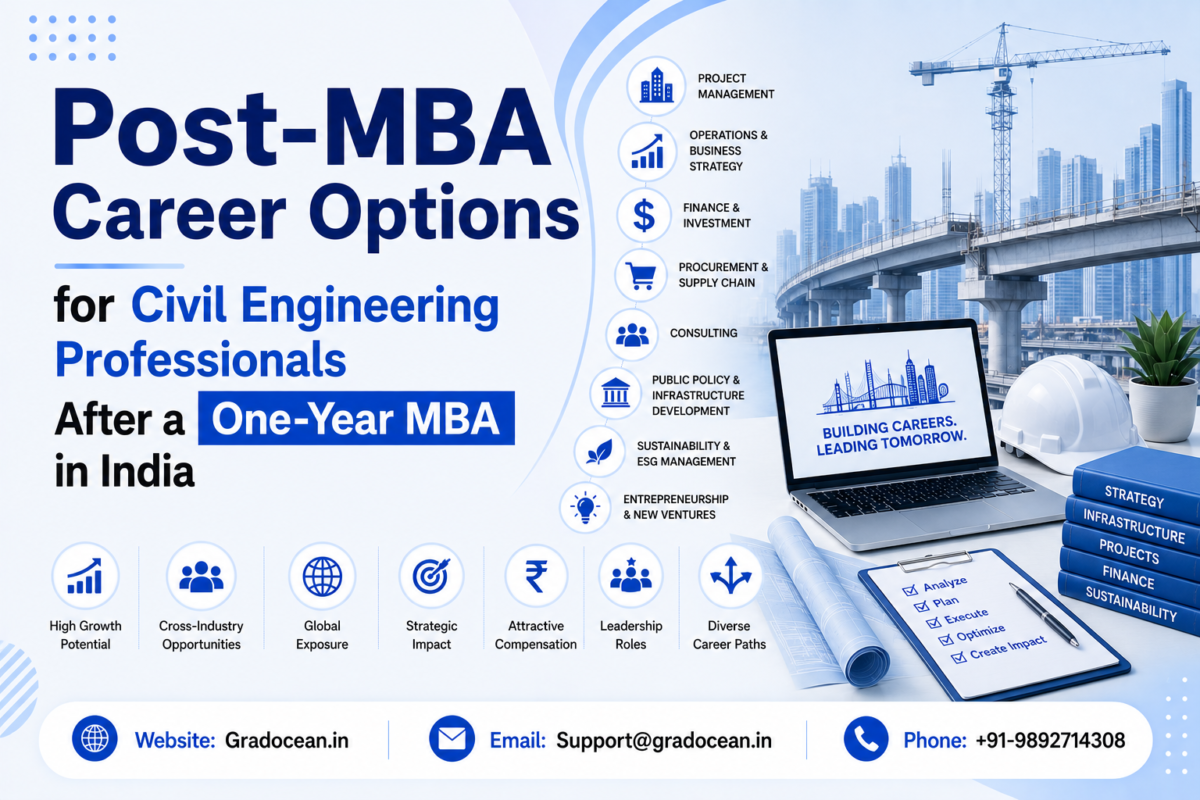
31. Post-MBA Career Options for Civil Engineering Professionals After a One-Year MBA in India