

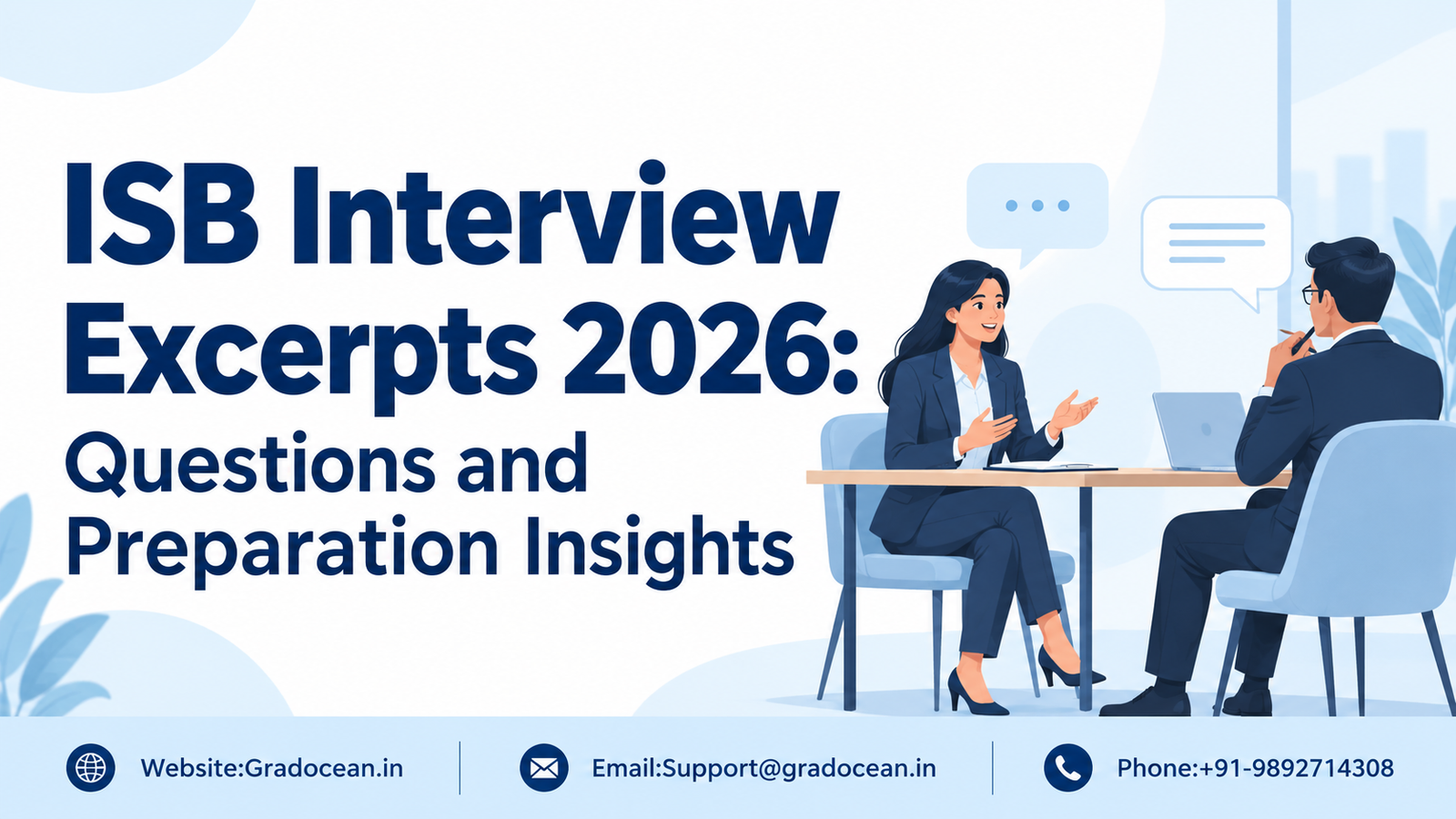
An ISB interview can start with an introduction and quickly move into detailed questions about your work, career decisions and post MBA goals. These five interview experiences cover discussions ranging from sector knowledge and artificial intelligence to ethics and conflict management.
Interview Experience 1: Career Decisions and a Sector Change
The discussion focused on career choices and reasons for moving into a different sector.
Questions included:
- Introduce yourself.
- Why did you join your first company?
- Why did you leave the company?
- What changes have you introduced in your current work?
- Why do you want an MBA?
- Why ISB?
- Why do you want to move into this sector?
- What are your views on the market in that sector?
- Why not enter the sector directly?
- Tell us about the pro bono initiative mentioned in your profile. Why did you choose it?
- Do you have any questions for us?
The conversation included five to six follow-up questions about the target sector.
What applicants can learn: If you are planning a career change, prepare beyond naming your preferred sector. Understand the roles you want, the market, the skills required and how your experience connects to that move. Be ready to explain why an MBA is necessary.
Interview Experience 2: Product Management, Reapplication and AI
The conversation began with work experience before moving into product management goals, changes since the previous application and AI.
Questions included:
- Tell us about yourself and your experience.
- Why did you join sales and marketing? What did you learn?
- What was your experience at Citi?
- What does your day-to-day work involve?
- What do you want to do after an MBA?
- Why can you not apply directly for a product management role?
- Why an MBA?
- Why ISB?
- What will you contribute to ISB?
- Which other programs have you applied to?
- As a reapplicant, what have you changed this year?
- What AI projects are you working on?
- How do you think AI will change product management?
- Which AI trend interests you?
New projects and an improved test score formed part of the discussion about progress since the previous application.
What applicants can learn: Your career goal should stand up to questions about whether you could pursue it without an MBA. If your application mentions AI projects, explain your contribution, what you learned and why the work matters. Reapplicants should describe specific improvements since their earlier attempt.
Interview Experience 3: Finance, Market Knowledge and Ethics
This interview involved four panelists, three with finance backgrounds, and included detailed questions about finance, market developments and ethical decisions.
Questions included:
- Why an MBA, and how would you contribute to ISB?
- Why investment banking or investment management?
- Who inspires you?
- Describe an ethical dilemma in your personal or professional life.
- What was the amount of SIP investment in Indian markets in August?
- Why does India need more wealth management?
- What is your alternative plan if you do not enter investment banking or investment management?
- What will you do if you do not get into ISB?
- Can you identify a value trap in India?
- As a risk analyst, what would you have done during the 2008 global financial crisis?
- What happened during the crisis, and how did the bubble burst?
- Which products generated the highest revenue for your firm?
- How did your conversation with the CEO go?
What applicants can learn: Finance applicants should prepare to discuss their industry, relevant market developments and the economics of their current business. For ethical questions, explain the competing concerns, your decision and its consequences. For questions involving market figures, pay attention to the period being asked about.
Interview Experience 4: Essay Details, Diversity and Leadership
This interview involved four panelists. The conversation began with AI and a point from the application essay, followed by questions about goals and working with others.
Questions and topics included:
- Explain the point about AI in your essay.
- Why an MBA?
- Why ISB over the IIMs?
- Why does cohort diversity matter for your short-term goal?
- How would you work with junior product managers who know the product better than you?
- A guesstimate.
What applicants can learn: Review every claim in your essays and be ready to explain it in detail. If you mention cohort diversity, connect it to something you want to learn or a responsibility you expect to take on. Leadership preparation should also cover working with people who have greater technical expertise than you.
Interview Experience 5: Current Work, Conflict and Self-Awareness
The discussion covered professional experience, reasons for pursuing an MBA now and responses to difficult situations.
Questions included:
- Tell us about your work so far.
- Explain your current role.
- What challenges do you face in your role?
- Why ISB?
- How would you respond if someone in your study group told everyone they would not work with you?
- Why do you want an MBA now?
- As a reapplicant, what went wrong last time?
- What is your weakness?
- What will you do if you do not get admitted?
- What are you looking forward to at ISB?
What applicants can learn: Prepare for questions that test judgement and self-awareness. In a conflict scenario, explain how you would understand the issue, speak with the person and help the group continue working. When discussing a weakness, use an honest example and explain what you are doing to improve.
What These Experiences Mean for Your Preparation
Across these interviews, several themes recur: understanding your own work, explaining your career choices, justifying the MBA and showing how you would contribute to ISB.
Start with your application and resume. For each major experience, be ready to explain:
- What you were responsible for.
- What decisions you made.
- What challenges you faced.
- What changed because of your work.
- What you learned.
Your post MBA goal also needs detail. Understand the role you want, the skills it requires and the gaps you need to address. Prepare for follow-ups such as “Why not apply directly?” and “What will you do if this plan does not work?”
A mock interview can help reveal where your answers become vague, lengthy or difficult to defend. Use the feedback to improve your examples and reasoning while keeping your responses conversational.
Other Articles of Interest:
1. ISB vs International MBA: How to Choose the Right Path for Your Career
2. Indian MBA Programs Are Rising Fast in Global Rankings — Here’s Why It Matters
3. Top Executive MBA Programs in India
4.GMAT Waiver for MBA: A Complete Guide to Test-Optional Business Schools
5.Top Global One-Year MBA Programs for Experienced Professionals: A Comprehensive Guide
6.Best MBA Programs for Healthcare: Top Schools, Curriculum & Career Scope (2026 Guide)
7. Best MBA Programs for Sustainability & ESG: Top Schools, Curriculum & Career Scope (2026 Guide)
8. ISB vs IIM One-Year MBA (2026): Fees, Placements, Rankings, ROI & Which is Better?
9. MBA ROI vs Rankings: How to Choose the Right MBA Program in 2026
11. HEC Paris MBA Essays 2027 Intake: A Complete Guide to Writing Winning Essays
16.MBA University of Virginia Darden MBA Admissions Guide (2026–2027 Intake)
18. MBA Letters of Recommendation (LOR): Complete Guide for Applicants
19.2026 IIM Ahmedabad PGPX Extempore Topics: Latest Questions & Preparation Guide
20. 18 Key Insights About ISB PGP Admissions
21.ISB PGP R1: What to Focus on Before You Submit Your Application
22. IIM Indore EPGP 2027–28: Admissions, Eligibility, Placements, Fees, Programme & Application Guide
24. IIM Lucknow IPMX 2027–28: Admissions, Eligibility, Placements, Batch Profile & Application Guide
25. Post-MBA Career Options for Fashion Professionals After a One-Year MBA in India
26. Post-MBA Career Options for Lawyers After a One-Year MBA in India
28. Post-MBA Career Options for PSU Professionals After a One-Year MBA in India
31. Post-MBA Career Options for Civil Engineering Professionals After a One-Year MBA in India
35. XLRI PGDM (GM) 2027: Eligibility, Admissions, Batch Profile, Placements and Career Opportunities
36. How to Prepare for MBA Applications While Working Full-Time