



For decades, the MBA has been considered one of the most powerful degrees for career advancement. However, rising tuition costs, changing job markets, and the growth of alternative learning pathways have led many professionals to question whether pursuing an MBA still makes financial sense in 2026.
The answer is not straightforward. The value of an MBA depends on several factors such as the school you attend, the industry you want to enter, and how effectively you leverage the opportunities offered during the program.
Understanding ROI in the Context of an MBA
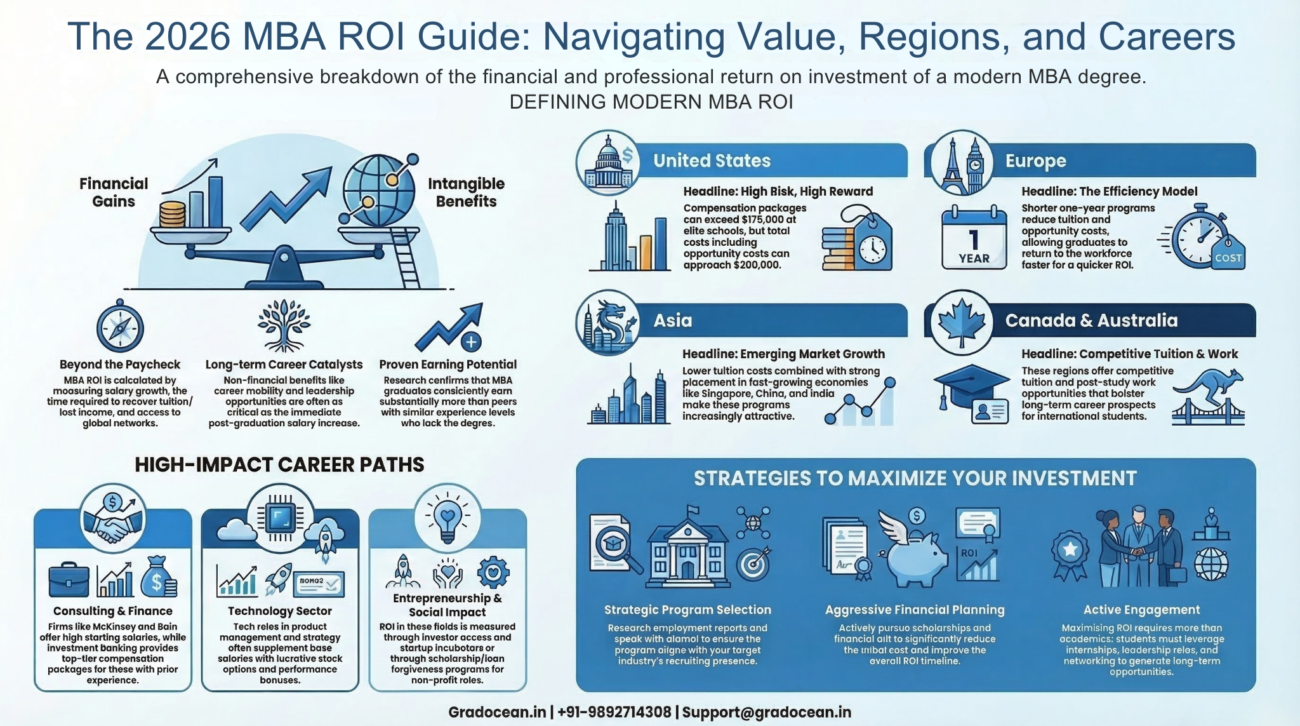
Return on investment for an MBA goes far beyond simply comparing tuition fees with post-graduation salaries. A comprehensive evaluation usually considers several elements.
These include:
-
salary growth after graduation
-
the time required to recover tuition and lost income
-
opportunities for career mobility
-
access to global networks and industry connections
-
long-term leadership opportunities
For many professionals, these non-financial benefits can be just as important as the immediate salary increase.
Research shows that MBA graduates often experience significant salary growth after completing their degrees. In many cases, earnings increase substantially compared with professionals who have similar experience but no MBA.
Regional Differences in MBA Return on Investment
The financial value of an MBA can vary significantly depending on where you study.
United States
Top American business schools continue to deliver strong salary outcomes. Graduates from leading programs frequently secure positions in consulting, finance, and technology with compensation packages that can exceed $175,000, often supplemented with signing bonuses and performance incentives.
However, the cost of attendance is also high. Tuition and living expenses at elite U.S. programs can approach $200,000 or more when opportunity costs are included. This means candidates should carefully evaluate whether their target career path justifies the investment.
Europe
European MBA programs are typically shorter, often lasting one year. This reduces both tuition expenses and the opportunity cost of leaving the workforce.
While salaries in Europe may be slightly lower than those in the United States, the shorter program duration allows graduates to return to the workforce faster, which often improves overall ROI.
Asia
Business schools in Asia have become increasingly attractive for many applicants due to lower tuition costs and strong placement opportunities in fast-growing regional economies.
Programs in countries such as Singapore, China, and India often provide strong returns for candidates who intend to build their careers within these markets.
Canada and Australia
MBA programs in Canada and Australia offer competitive tuition compared to the United States and often provide post-study work opportunities that can improve long-term career prospects for international students.
ROI Across Different Career Paths
The industry you plan to enter after an MBA can significantly influence your return on investment.
Consulting
Consulting remains one of the most popular post-MBA career paths. Firms such as McKinsey, Bain, and Boston Consulting Group offer high starting salaries and strong career progression, making consulting one of the most financially rewarding MBA outcomes.
Technology
Technology companies also hire many MBA graduates for roles in product management, operations, and strategy. Compensation in the technology sector can include stock options and bonuses in addition to base salary.
Finance
Investment banking and private equity roles often offer some of the highest compensation packages for MBA graduates. However, entry into these sectors is highly competitive and typically favors candidates with prior finance experience.
Entrepreneurship
For aspiring entrepreneurs, ROI cannot always be measured immediately through salary. Instead, the value often comes from access to investors, startup incubators, and networks that support venture creation.
Social impact careers
MBA graduates who pursue careers in non-profit organizations or social enterprises may earn lower salaries compared with consulting or finance roles. However, many programs provide scholarships and loan forgiveness options for candidates choosing these career paths.
Factors That Influence MBA ROI
Several factors determine whether an MBA delivers strong returns.
School reputation and placement outcomes play a major role. Graduates from top programs tend to have better access to recruiters and higher-paying opportunities.
Industry choice also matters. Careers in consulting, finance, and technology often provide faster financial returns than other sectors.
Another key factor is how actively students engage with the program. Networking, internships, and leadership experiences often create opportunities that extend far beyond graduation.
According to surveys of MBA graduates, a large majority report that their degree delivered a positive return on investment and helped improve both employability and career progression.
Strategies to Maximize MBA ROI
Prospective students can take several steps to improve the return on their investment.
Choosing the right region and program is important. Candidates should evaluate where their target industry has the strongest recruiting presence.
Researching employment reports and speaking with alumni can help applicants understand realistic career outcomes.
Scholarships and financial aid can significantly reduce the cost of the degree and improve overall ROI.
Finally, building a strong professional network during the program often generates long-term career opportunities that extend well beyond the immediate post-MBA role.
Final Thoughts
An MBA continues to be a valuable degree in 2025, but its return on investment depends heavily on individual goals and circumstances.
For some professionals, it serves as a powerful catalyst for career transformation, salary growth, and global mobility. For others, especially those who already have strong career momentum, the benefits may be less pronounced.
Ultimately, the key question is not simply whether an MBA is worth it, but whether it aligns with your personal career ambitions and long-term objectives.
When chosen strategically and pursued with clear goals, an MBA can remain one of the most effective ways to accelerate professional growth.
Need Personalized Guidance for MBA Applications?