



Receiving a rejection from a business school can feel discouraging, especially after months of preparation. However, many successful MBA candidates are admitted on their second attempt. Reapplying can be a strong option if you approach the process strategically and demonstrate meaningful improvement in your profile.
Admissions committees often view reapplicants positively when they show growth, self-reflection, and clearer career direction since their previous application. In fact, several top programs admit a portion of their incoming class from reapplicant pools each year.
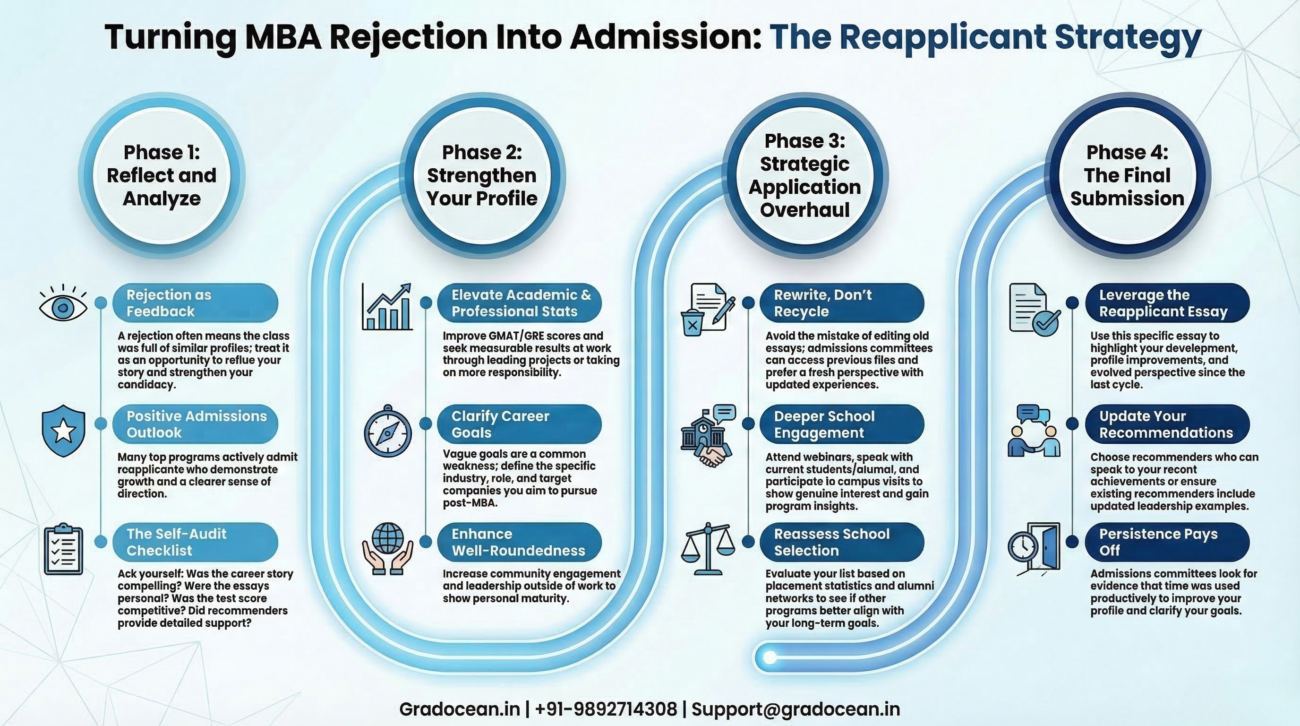
Understanding What a Rejection Means
A rejection does not necessarily mean that your profile was weak. Business schools evaluate applications within the context of the overall applicant pool, class composition, and diversity goals. Sometimes strong candidates are not admitted simply because the class is already full of applicants with similar backgrounds.
Instead of viewing rejection as failure, it can be helpful to treat it as feedback. The extra time before the next application cycle gives you an opportunity to strengthen your candidacy and refine your story.
Review Your Previous Application Carefully
Before preparing a new application, take time to analyze your previous submission. Understanding what may have limited your chances is an important first step.
Consider questions such as:
-
Was your career story clear and compelling?
-
Did you explain why you needed an MBA and why that specific school?
-
Were your essays personal and reflective, or did they sound generic?
-
Was your test score competitive for your target programs?
-
Did your recommenders provide detailed and supportive letters?
If you are unsure where the gaps were, feedback from mentors, peers, or admissions experts can provide valuable perspective.
Strengthen Areas That Need Improvement
Once you identify the weak areas in your application, create a clear plan to improve them before the next admissions cycle.
Common areas where applicants can demonstrate improvement include:
Test scores
Improving your GMAT or GRE score can make a noticeable difference, especially if you come from an overrepresented background.
Professional experience
Admissions committees want to see progress in your career. Taking on more responsibility, leading projects, or achieving measurable results at work can strengthen your profile.
Extracurricular involvement
Community engagement and leadership outside the workplace help demonstrate a well-rounded personality.
Career clarity
Vague goals are a common weakness in MBA applications. A stronger application clearly defines the industry, role, and companies you aim to pursue after the MBA.
Show Personal and Professional Growth
Business schools expect reapplicants to show how they have evolved since their previous application. This growth should be visible in both your professional achievements and your personal reflections.
For example, you may have taken on leadership responsibilities, initiated new projects, or developed a clearer understanding of your career goals. These changes demonstrate maturity and self-awareness, qualities that admissions committees value highly.
Rewrite Your Application Instead of Reusing Old Essays
One of the biggest mistakes reapplicants make is submitting slightly edited versions of their previous essays. Admissions committees often have access to earlier applications, so they can easily identify recycled content.
Instead, approach the application with a fresh perspective. Your essays should reflect your updated experiences, deeper self-reflection, and clearer goals.
A stronger narrative might include:
-
more specific career goals
-
examples of leadership and impact since your last application
-
clearer reasons for choosing the particular business school
Reconsider Your School Selection
While it is perfectly reasonable to reapply to your original target schools, it may also be useful to reassess your overall list.
Consider adding programs that align well with your career goals and background. Evaluating factors such as placement statistics, alumni networks, industry strengths, and learning style can help you identify schools that may be a better fit.
Expanding your school list can increase the likelihood of receiving an admit while still targeting programs that support your long-term goals.
Engage More With Your Target Schools
Another effective strategy is to deepen your interaction with the schools you plan to apply to.
You can do this by:
-
attending information sessions and webinars
-
speaking with current students or alumni
-
participating in campus visits or virtual events
These interactions help you gain insights about the program and demonstrate genuine interest in the school.
Use the Reapplicant Essay Effectively
Many MBA programs include a specific essay for reapplicants. This essay provides an opportunity to explain what has changed since your last application.
Instead of focusing on the rejection itself, use this space to highlight your development. Discuss the steps you have taken to improve your profile and how your goals or perspective have evolved.
Admissions committees appreciate applicants who show honesty, reflection, and determination.
Consider Updated Recommendations
Recommendations are another area where reapplicants can show progress. If possible, choose recommenders who can speak about your recent achievements and leadership growth.
If you decide to use the same recommenders again, ensure that their letters include updated examples that reflect your new responsibilities or accomplishments.
Final Thoughts
Reapplying to business school can be a valuable opportunity to present a stronger and more refined application. Admissions committees do not penalize candidates for applying again. Instead, they look for evidence that applicants have used the time productively to improve their profiles and clarify their goals.
By conducting an honest self-assessment, strengthening key aspects of your profile, and presenting a clearer career narrative, your second application can be significantly more competitive than the first.
With the right strategy and persistence, many candidates ultimately secure admission to the programs they originally targeted.
Need Personalized Guidance for MBA Applications?