



Many MBA applicants assume that strong test scores, a good GPA, and solid work experience guarantee admission to top business schools. However, every year many high-achieving candidates still receive rejection letters.
The reason is simple: MBA admissions are not just about numbers. Admissions committees evaluate the overall story, impact, and clarity of your application.
Below are some of the most common mistakes that cause even strong candidates to miss out on top MBA admits.
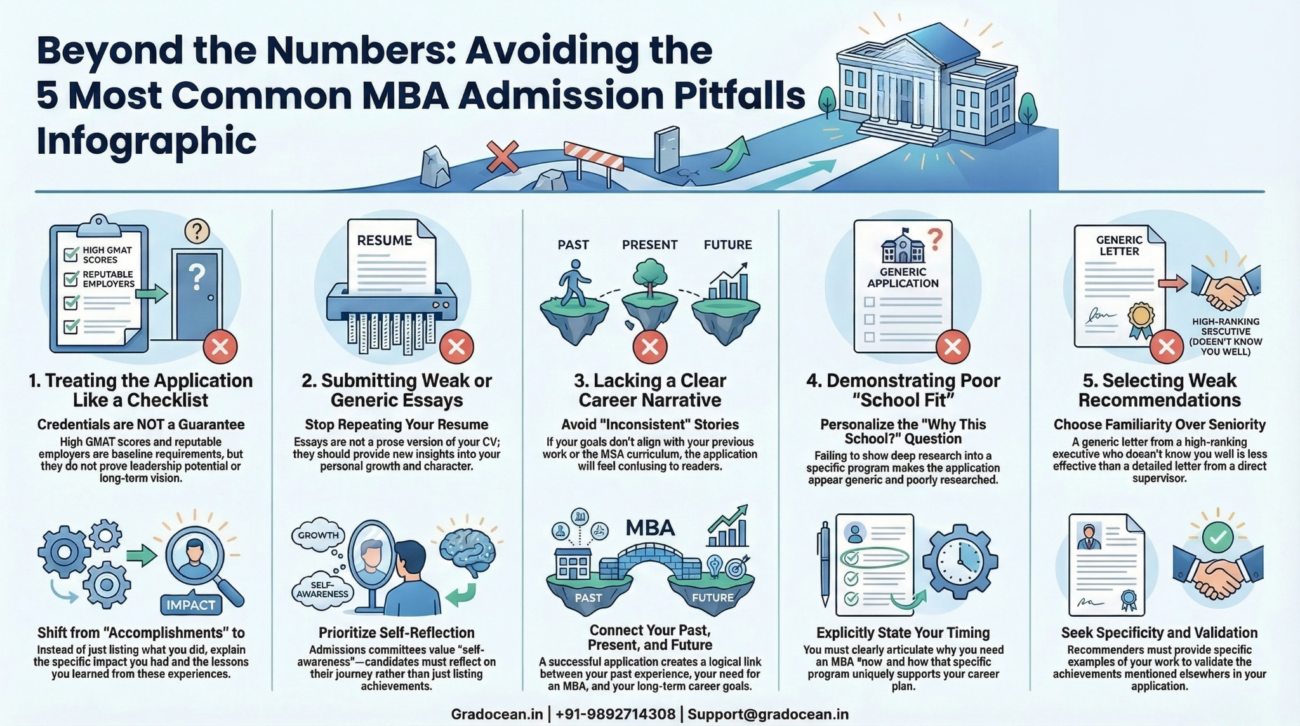
1. Treating the Application Like a Checklist
Many applicants believe that having the right credentials—strong GMAT/GRE scores, good academics, and a reputable employer—is enough.
But admissions committees are not just evaluating achievements. They want to understand your leadership potential, judgement, and long-term vision.
If your application only lists accomplishments without explaining your impact or learning, it may fail to stand out.
2. Weak or Generic Essays
Essays are one of the most important parts of the MBA application. Yet many candidates treat them as a formality.
Common problems include:
-
Writing essays that simply repeat the resume
-
Using generic leadership stories
-
Failing to reflect on personal growth
Admissions committees want self-awareness and reflection, not just achievements.
3. Lack of a Clear Career Narrative
Top business schools look for applicants with a clear and logical career trajectory.
Many applications fail because the story doesn’t connect:
-
Past experience
-
MBA goals
-
Long-term career vision
When these elements don’t align, the application can feel confusing or inconsistent to admissions readers.
4. Poor School Fit
Another common mistake is applying to schools without demonstrating why that specific program fits your goals.
Admissions committees expect applicants to show:
-
Why they want an MBA now
-
Why they chose that particular school
-
How the program supports their career plans
Without this clarity, the application may appear poorly researched.
5. Weak Recommendations
Recommendations play a crucial role in validating your achievements.
Many candidates make the mistake of choosing recommenders based on seniority rather than familiarity. When recommenders cannot provide specific examples of your work, the letters often sound generic and unconvincing.
Final Thoughts
A strong MBA profile goes beyond test scores and prestigious employers. Admissions committees look for candidates who can present a compelling story, clear goals, and meaningful impact.
Avoiding these common mistakes can significantly improve your chances of success.
Remember: MBA admissions are not just about credentials—they are about positioning your story effectively.
Need Personalized Guidance for MBA Applications?