



An MBA (Master of Business Administration) is often seen as a gateway to leadership roles, higher salaries, and global career opportunities. Many professionals consider it when they want to accelerate their careers or switch industries.
However, pursuing an MBA requires a significant investment of time, money, and effort. Before applying, it’s important to ask a simple question: Do you actually need an MBA to achieve your career goals?
What Value Does an MBA Provide?
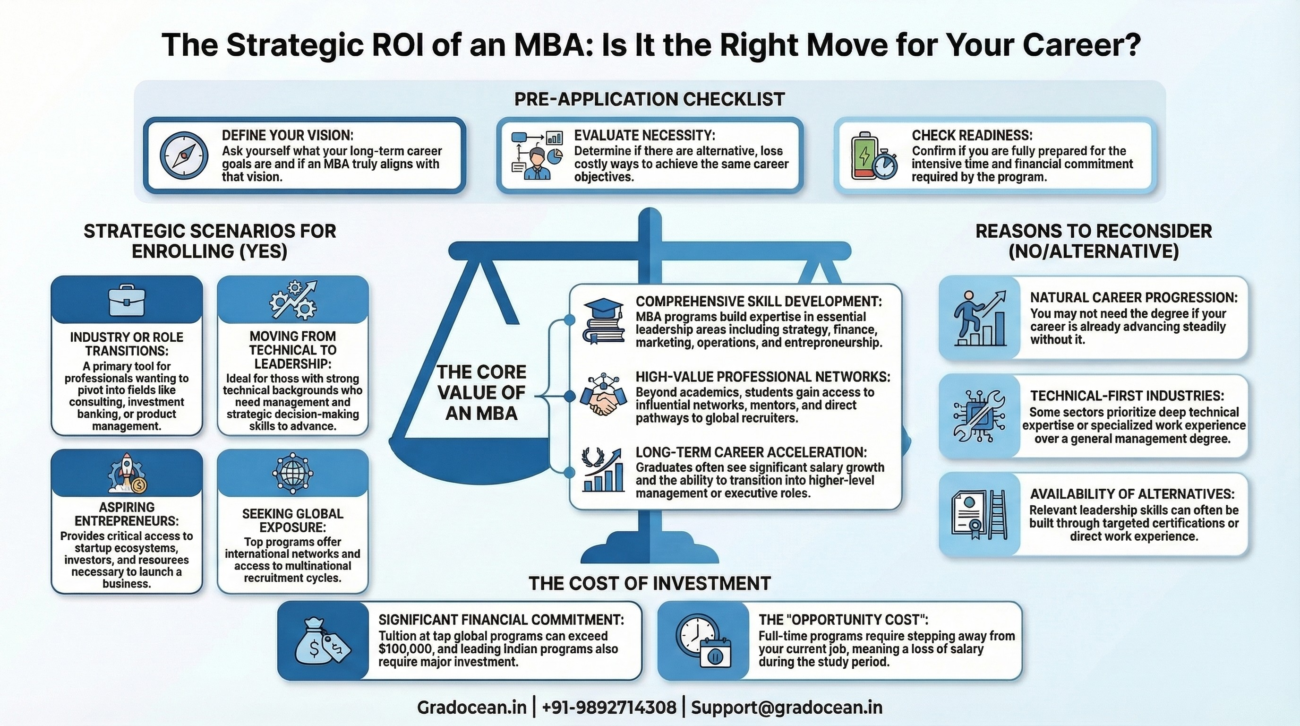
MBA programs are designed to develop business leadership and management skills. Students gain exposure to areas such as strategy, finance, marketing, operations, and entrepreneurship.
Apart from academics, an MBA can offer:
-
Strong professional networks
-
Access to recruiters and career opportunities
-
Leadership and management training
-
Opportunities to switch industries or roles
-
Higher long-term earning potential
For many professionals, the MBA serves as a career accelerator.
Situations Where an MBA Makes Sense
An MBA can be particularly useful in certain career situations.
1. You Want to Change Industries or Roles
Many professionals use an MBA to transition into fields such as consulting, investment banking, product management, or strategy roles.
2. You Want to Move Into Leadership Positions
Professionals with strong technical backgrounds often pursue an MBA to develop management and strategic decision-making skills.
3. You Plan to Start a Business
MBA programs provide access to startup ecosystems, mentors, investors, and entrepreneurship resources.
4. You Want Global Career Opportunities
Top MBA programs often offer international exposure, global networks, and access to multinational recruiters.
When an MBA May Not Be Necessary
An MBA is not always required for career success.
You might not need one if:
-
Your career is already progressing well without it
-
Your industry prioritizes technical expertise over management degrees
-
You can build relevant skills through certifications or work experience
-
You already run a successful business
In some cases, experience and industry knowledge may matter more than a graduate degree.
The Cost and Commitment
Pursuing an MBA is a major commitment. Tuition at top global programs can exceed $100,000, while leading Indian programs also require a significant financial investment.
Additionally, full-time programs may require stepping away from your job, creating an opportunity cost.
However, many MBA graduates experience significant salary growth and career acceleration, which can justify the investment over time.
Questions to Ask Yourself Before Applying
Before deciding to pursue an MBA, consider the following:
-
What are my long-term career goals?
-
Will an MBA significantly accelerate my career path?
-
Are there alternative ways to achieve the same goals?
-
Am I ready for the financial and time commitment?
These questions can help clarify whether an MBA is the right step.
Final Thoughts
An MBA can be a powerful tool for career growth, leadership development, and industry transitions. But it is most valuable when pursued with clear goals and a strong purpose.
Instead of following trends, focus on whether the degree truly aligns with your career vision and long-term ambitions.
Need Personalized Guidance for MBA Applications?