


Overview
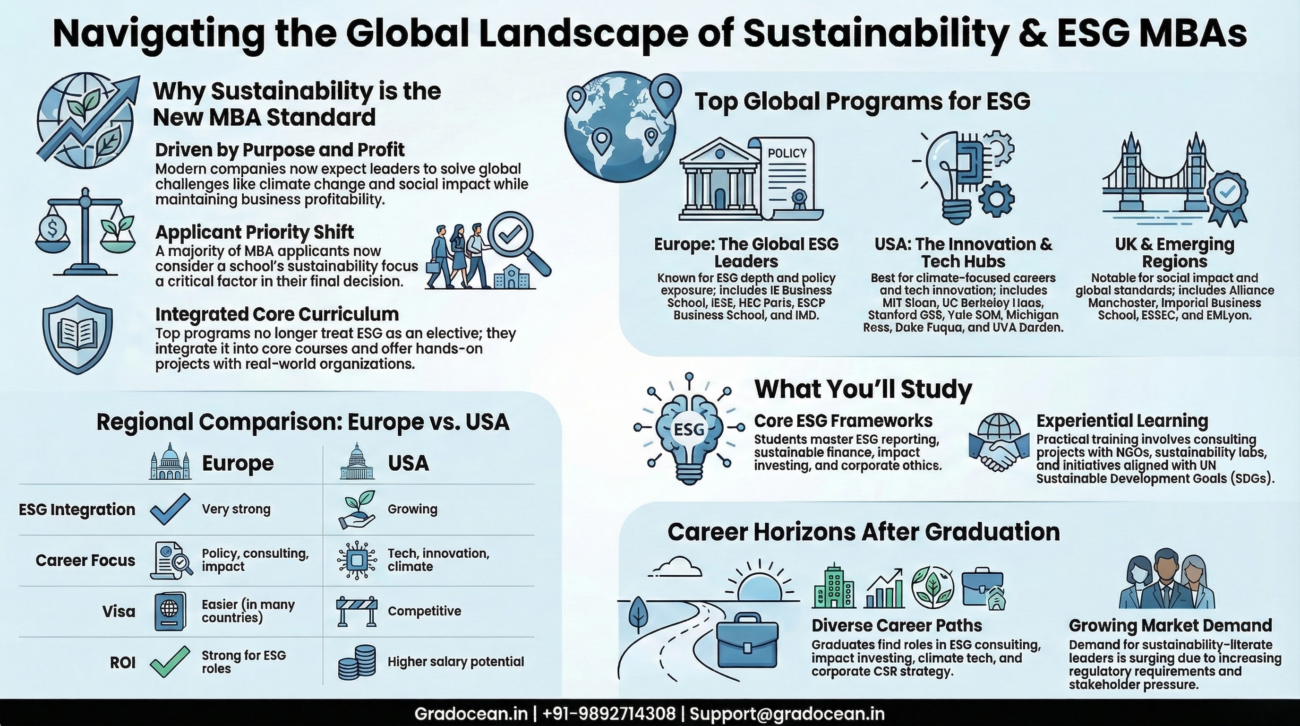
Sustainability and ESG (Environmental, Social, and Governance) have become central to modern business education. Today, companies expect leaders to balance profit with purpose, driving demand for MBA graduates who understand climate change, social impact, and ethical governance.
In fact, a majority of MBA applicants now consider sustainability an important factor when choosing a business school, highlighting how critical ESG has become in management education.
This guide combines insights from top global rankings and program analysis to highlight the best MBA programs for sustainability and ESG.
Why Sustainability MBAs Are Growing
Sustainability is no longer a niche—it’s shaping industries across consulting, finance, tech, and operations.
Top MBA programs now:
- Integrate ESG into core curriculum
- Offer specializations in sustainability, climate, and impact investing
- Provide hands-on projects with real organizations
The goal is simple: train leaders who can solve global challenges while building profitable businesses.
Top MBA Programs for Sustainability & ESG
Europe (Global Leaders in ESG Education)
European schools dominate ESG rankings due to strong curriculum integration.
- IE Business School – Strong focus on impact investing and sustainability strategy
- IESE Business School – Deep focus on responsible leadership and sustainability concentration
- HEC Paris – Dedicated sustainability institute and ESG-focused curriculum
- ESCP Business School – Sustainability embedded across programs
- IMD – Strong focus on sustainability leadership and corporate impact
Europe is best for ESG depth, policy exposure, and sustainability integration.
USA (Innovation and Interdisciplinary Approach)
- MIT Sloan – Sustainability certificate and focus on climate innovation
- UC Berkeley Haas – Strong sustainability curriculum and interdisciplinary exposure
- Stanford GSB – Real-world environmental problem solving
- Yale SOM – Focus on climate, environment, and public policy
- Michigan Ross (Erb Institute) – MBA + sustainability dual degree
- Duke Fuqua – Energy and environment concentration
- Darden (UVA) – Experiential sustainability projects
The US is best for innovation, technology, and climate-focused careers.
UK and Other Regions
- Alliance Manchester Business School – Strong ESG integration and social impact focus
- Imperial Business School – ESG-focused electives and sustainability strategy
- ESSEC and EMLyon – Strong sustainability frameworks aligned with global standards
What You’ll Study in a Sustainability MBA
Core areas typically include:
- ESG frameworks and reporting
- Sustainable finance and impact investing
- Climate change and energy systems
- Corporate governance and ethics
Experiential learning includes:
- Consulting projects with NGOs and startups
- Sustainability labs and field projects
- Social impact initiatives
Many programs align with global sustainability frameworks like the UN Sustainable Development Goals (SDGs).
Career Opportunities After a Sustainability MBA
Common roles include:
- ESG or Sustainability Consulting
- Impact Investing and Sustainable Finance
- Climate Tech and Clean Energy
- Corporate Strategy and CSR roles
- Policy and development organizations
Demand is growing as companies face increasing regulatory and stakeholder pressure to adopt sustainable practices.
Europe vs USA for Sustainability MBA
| Factor | Europe | USA |
|---|---|---|
| ESG Integration | Very strong | Growing |
| Career Focus | Policy, consulting, impact | Tech, innovation, climate |
| Visa | Easier (in many countries) | Competitive |
| ROI | Strong for ESG roles | Higher salary potential |
Key Takeaways
- Sustainability is now a core part of MBA education
- Europe leads in ESG depth, while the US leads in innovation
- Top programs offer hands-on experience and real-world projects
- Career opportunities are expanding across consulting, finance, and tech
Other Articles of Interest:
Final Thoughts
If you’re aiming for a career in ESG, climate, or impact, choosing the right MBA program is critical.
Focus on:
- Schools with strong ESG curriculum and practical exposure
- Geography aligned with your career goals
- Building relevant experience through projects and internships