



MBA programs come in different formats, but one-year MBA programs have become increasingly popular among experienced professionals. These accelerated programs allow candidates to earn an MBA in a shorter time frame compared to traditional two-year programs.
However, a one-year MBA is not the right option for everyone. Understanding its structure, benefits, and limitations can help you decide whether it aligns with your career goals.
What Is a One-Year MBA?
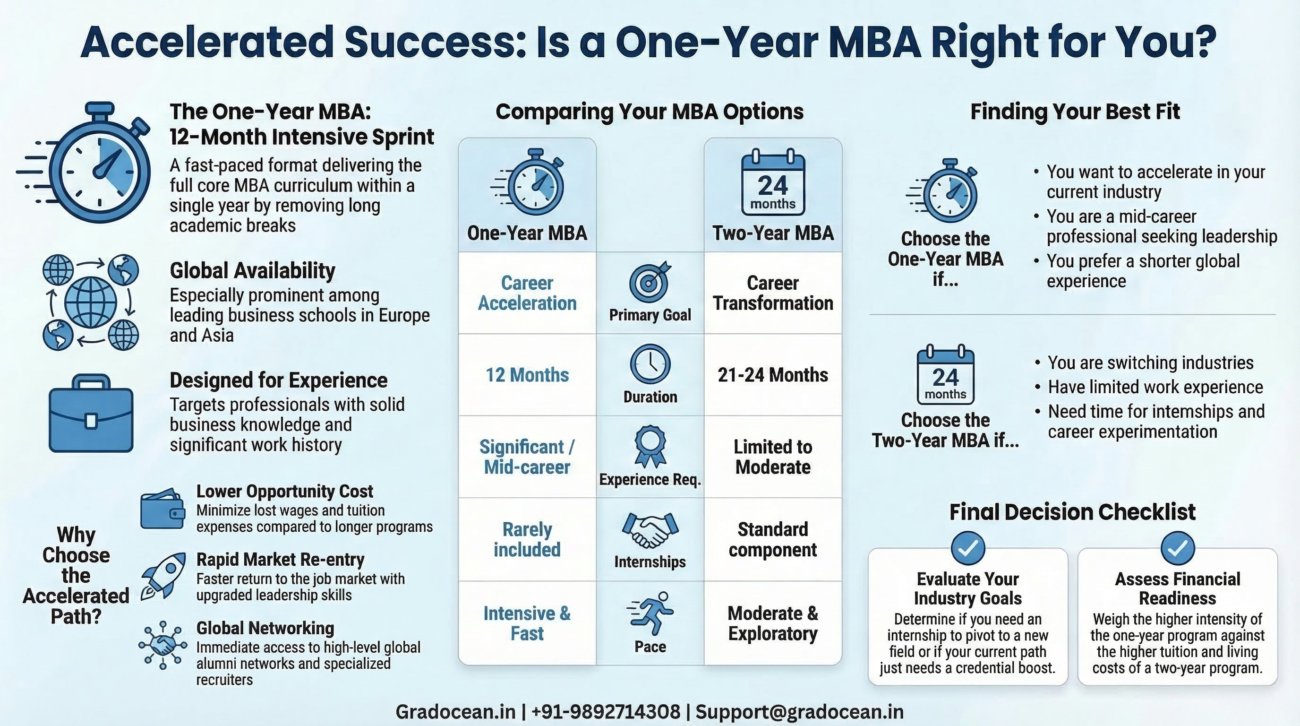
A one-year MBA is an intensive program designed to deliver the core MBA curriculum within 12 months. Unlike traditional two-year programs, these programs move at a faster pace and often require students to complete coursework without long breaks.
Many leading global business schools offer this format, particularly in Europe and Asia
Advantages of a One-Year MBA
One of the biggest attractions of a one-year MBA is the time efficiency. Students spend less time away from the workforce while still gaining advanced management education.
Key benefits include:
-
Lower opportunity cost due to the shorter duration
-
Faster return to the job market
-
Intensive and focused learning environment
-
Access to global alumni networks and recruiters
For professionals who already have significant work experience, this format can be a highly efficient way to upgrade their skills.
Who Should Consider a One-Year MBA?
A one-year MBA is typically best suited for professionals who already have clear career goals and solid work experience.
It can be ideal for:
-
Professionals looking to accelerate their careers within the same industry
-
Candidates who already have strong business knowledge
-
Mid-career professionals seeking leadership roles
-
Applicants who want a global MBA but prefer a shorter program
Because the program is fast-paced, students are expected to adapt quickly and handle a demanding academic schedule.
When a Two-Year MBA Might Be Better
For some candidates, a traditional two-year MBA may still be the better option.
This is especially true for applicants who:
-
Want to switch industries or job functions
-
Need time for internships and career exploration
-
Have limited work experience
-
Want a deeper campus experience with internships and extracurricular activities
Two-year programs often provide more opportunities for career experimentation.
Key Factors to Consider
Before choosing between a one-year and two-year MBA, consider the following:
-
Your career goals
-
Whether you want to switch industries or roles
-
Your current work experience level
-
The financial and opportunity costs of each option
Understanding these factors will help determine which format fits your situation best.
Final Thoughts
A one-year MBA can be a powerful option for experienced professionals who want to quickly enhance their management skills and return to the workforce.
However, candidates seeking major career changes or more time for exploration may benefit more from a traditional two-year MBA.
Ultimately, the right choice depends on your career goals, experience, and long-term plans.
Need Personalized Guidance for MBA Applications?